Achieved a small ambition last night in finally hearing Hannah Scott live. We weren’t disappointed.
Actually she had a mountain to climb. Neither the venue billing nor the tickets mentioned the supporting act, so she came as a complete surprise to the audience, who were there to hear Spiers and Boden (of Bellowhead), full stop.
It was a full house, not a spare seat, and they were full on folk fans. So full on that someone in the front row was stitching a hat whilst waiting for the show to start. I thought I’d be the oldest there, but most of us were. Very Sevenoaks.
I read somewhere that Hannah believes her live performances deliver something extra, and that’s true. You get the soaring vocals and the subtle lyrics and the skilled guitar and piano instrumental, but there is more. It’s the passion, I think, and the directness of connection. That voice which cries out, and then drops almost to a whisper. The intimacy of confidences shared and guards dropped.
We wanted it to go on, and I know she won converts.
I’m ashamed to say we sneaked out before Spiers and Boden were done. No disrespect; they are as good as it gets. But the SS had an early start, and we’d had our money’s worth with Hannah, and it’s just...I don’t know...Folk should be hot and sweaty. Three pints of cider and sunshine in a field or a tatty back room, a dog under the table and a crush at the bar. It’s a foot-stomping participation sport, not a performance art. Where under forties are allowed as well.
It was good to have heard her live and good to say hello (trying and failing not to come over as a pervy middle-aged stalker). She has a charming smile.
Thank you Hannah.
(Watch out for her new album, which she’s about to record in Italy; it’s going to be a good one).
Friday, 13 May 2011


Wednesday, 27 April 2011
Burn it to the Ground
And another (I did warn you!). This girl writes songs quicker than Ernie Wise wrote plays...
Monday, 18 October 2010
BT: Not Very Brave
I am not much of a rider, in spite of having lessons all through the school holidays of my childhood. It was the jodhpurs that put me off. They were the old fashioned type made of non-stretch cavalry twill that ballooned at the hip, and getting them off was hell. And while hacking out was fun, schooling, with all that 'Round the World', figures of eight and such like was really, really tedious.
I've only had one fall, when a cousin in Essex took me out for a gallop on a hunter. I lost the stirrups and came off, but landed on my feet and wound up running alongside hanging onto the reins (it was drummed in from an early age; "If you come off, never let go"). As falls go it was probably quite elegant, but it wasn't the competently casual look I'd been aiming for.
The last time I rode with any serious intent was when I was first dating the SS; I got run away with, but managed to remember one was meant to turn the thing, and that worked. I suppose I must have passed whatever test as a potential life partner she was putting me through.
There have been a few pony trekking outings since in the Highlands. On the last occasion we came down a slope so steep that the rear of my mount was more or less sitting on the ground, and I found my feet doing the sort of bent-kneed walking that children do in pedal cars. That time the SS and K so liked one of the Highland ponies that they bought it, which raised a few logistical problems, as we were returning on the sleeper.
Another piece of equestrian lore I was regaled with is that one should always try and stop a loose horse. The favoured technique is to stand in front of it as it careers towards you, and stretch out one's arms. Needless to say, when this has happened at point-to-points, I find a compelling reason for setting off in the opposite direction. While doing this once, I was put to shame by my 70 year old mother who stood her ground doing the heroic arm thing.
What all this is leading to is yesterday afternoon, when the SS received a call about an escaped horse. I don't know why they called her, but she went down and recognised the escapee as a stallion belonging to a neighbour. The beast had been trying to get to a mare, and was some way from home (the mare was a grey pony; apparently they use grey mares to get stallions in the mood at stud, which suggests gentlemen horses prefer petite blondes).
The stallion was very steamed up and overexcited, but with help they managed to get a halter onto it and walk it home. Since then we've been shown this video of the same horse, before it came here. It provides a clue as to how he got out of his field...and also as to why I prefer to leave catching horses to other, braver folk (sorry about the music; it's French).
I've only had one fall, when a cousin in Essex took me out for a gallop on a hunter. I lost the stirrups and came off, but landed on my feet and wound up running alongside hanging onto the reins (it was drummed in from an early age; "If you come off, never let go"). As falls go it was probably quite elegant, but it wasn't the competently casual look I'd been aiming for.
The last time I rode with any serious intent was when I was first dating the SS; I got run away with, but managed to remember one was meant to turn the thing, and that worked. I suppose I must have passed whatever test as a potential life partner she was putting me through.
There have been a few pony trekking outings since in the Highlands. On the last occasion we came down a slope so steep that the rear of my mount was more or less sitting on the ground, and I found my feet doing the sort of bent-kneed walking that children do in pedal cars. That time the SS and K so liked one of the Highland ponies that they bought it, which raised a few logistical problems, as we were returning on the sleeper.
Another piece of equestrian lore I was regaled with is that one should always try and stop a loose horse. The favoured technique is to stand in front of it as it careers towards you, and stretch out one's arms. Needless to say, when this has happened at point-to-points, I find a compelling reason for setting off in the opposite direction. While doing this once, I was put to shame by my 70 year old mother who stood her ground doing the heroic arm thing.
What all this is leading to is yesterday afternoon, when the SS received a call about an escaped horse. I don't know why they called her, but she went down and recognised the escapee as a stallion belonging to a neighbour. The beast had been trying to get to a mare, and was some way from home (the mare was a grey pony; apparently they use grey mares to get stallions in the mood at stud, which suggests gentlemen horses prefer petite blondes).
The stallion was very steamed up and overexcited, but with help they managed to get a halter onto it and walk it home. Since then we've been shown this video of the same horse, before it came here. It provides a clue as to how he got out of his field...and also as to why I prefer to leave catching horses to other, braver folk (sorry about the music; it's French).
Friday, 1 October 2010
A Summer Sabbatical
BT been a bit distracted.
There's been a bit of this:

Butter wouldn't melt? Don't be deceived; she's the hound from hell. Escapologist, sadist, roller in and eater of the unspeakable. Chews cookbooks for breakfast and consumes fingers as a sign of affection.
A lot of this:

Bob's first car isn't the little runabout I'd anticipated. I can't tell you the hours we've spent under it. We can now change a gearbox with our eyes closed, and putting in a replacement engine (off eBay) was so far out of my comfort zone it might as well have been brain-surgery. What I don't know about bodywork would fit on a postage stamp. Some good father-son bonding in there somewhere, though.
Some of this:

One perfect day Bob and I paddled a couple of miles to get here - mostly in circles. The bay may have a proper name, but it's always been 'Houpadout Bay' to my family, ever since, on some picnic expedition in the 1930s, a visiting aunt exclaimed, "Hope I don't fall in".
And plenty of this:
There's been a bit of this:

Butter wouldn't melt? Don't be deceived; she's the hound from hell. Escapologist, sadist, roller in and eater of the unspeakable. Chews cookbooks for breakfast and consumes fingers as a sign of affection.
A lot of this:
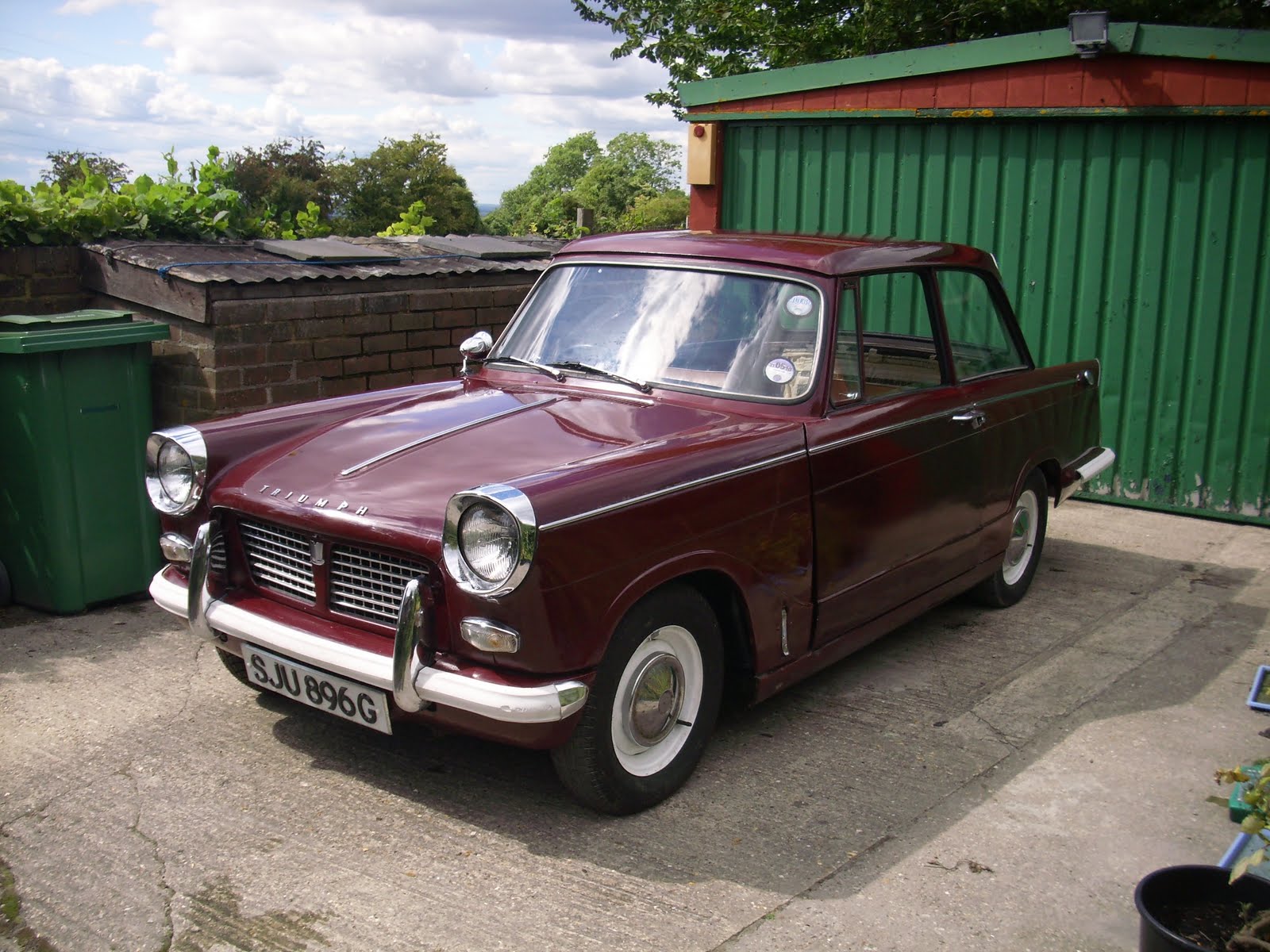
Bob's first car isn't the little runabout I'd anticipated. I can't tell you the hours we've spent under it. We can now change a gearbox with our eyes closed, and putting in a replacement engine (off eBay) was so far out of my comfort zone it might as well have been brain-surgery. What I don't know about bodywork would fit on a postage stamp. Some good father-son bonding in there somewhere, though.
Some of this:

One perfect day Bob and I paddled a couple of miles to get here - mostly in circles. The bay may have a proper name, but it's always been 'Houpadout Bay' to my family, ever since, on some picnic expedition in the 1930s, a visiting aunt exclaimed, "Hope I don't fall in".
And plenty of this:
Wednesday, 29 September 2010
Sunday, 20 June 2010
I Wish We Hadn’t Let That Goal In...
Last week I was paddling across Loch Etive with my son, under the soaring bulk of Ben Cruachan. It occurred to me that at 3,694 from sea level, the height of the mountain was over a thousand feet less than the depth of the sea bed in the Gulf of Mexico. We had arrived a few days before via a hundred mile detour, while engineers struggled to recover a railway carriage which was perched 40 foot above the road, after it had derailed at the foot of Cruachan. It brought home the magnitude of the task of capping the current oil spill, and the sheer, irritating, negative pointlessness of the current American diatribe of invective against ‘British Petroleum,’ and by implication, all things British, as Satans of the western world.
In March 1967 the Torrey Canyon, a tanker carrying 120,000 tons of crude oil, ran aground on the Seven Stones Reef off Cornwall and the Scilly Isles. The Torrey Canyon was a US built ship owned and operated by a subsidiary of the Union Oil Company of California. The Captain, Pastrengo Rugiati, who was held responsible for the navigational error which caused the disaster, was an Italian recruited by Consulich, agents for Union Oil.
The Royal Navy were working at the scene within four hours. 42 ships were deployed to spray over 10,000 tons of dispersants. Efforts to use foam booms to contain the oil were of limited success due to their fragility in high seas. In an attempt to sink the ship and burn off and break up the oil, the RAF and Royal Navy dropped 62,000lbs of bombs, 5,200 gallons of petrol, 11 rockets and large quantities of napalm onto the ship.
Bombing eventually sunk the ship and the oil slick was finally dispersed by favourable weather. By then tens of thousands of seabirds had been killed, together with huge numbers of marine organisms including all fish within a 75 mile radius. The resultant oil release coated miles of Cornish beach in brown sludge, in what was then the world’s worst environmental disaster. The slick stretched along hundreds of kilometres of the south coast of Britain and Normandy, killing most of the marine life it touched and blighting the areas for over a decade after. When I was living and working in Cornwall six years later, football-sized lumps of crude oil were still sweeping ashore from the wreck.
Mistakes were made in this first oil disaster. A lot of technological lessons were learned, and maritime law was changed. But one thing stands out to me; a national government which put blame on the back-burner and focussed its immediate resources on tackling the problem.
Today BP chief executive Tony Hayward is receiving further vilification for spending a day with his son sailing at Cowes this weekend. Not adroit of him, although I doubt the man has seen much of his family in the last few weeks. Mind you, I see that President Barack ‘the buck stops here’ Obama was pictured in the Chicago Sun Times sporting a White Sox hat and drinking beer whilst enjoying a White Sox game at the Nationals last Friday. Of course, as Obama is reported to have made clear, “I can’t dive down there and plug the hole. I can’t suck it up with a straw”.
Following its merger with Amoco (Standard Oil of Indiana) BP has as many (give or take one percentage point) American as British shareholders. The American designed Deepwater Horizon rig is owned by Transocean, essentially an American company (it originated in Birmingham Alabama, but relocated to Switzerland two years ago for tax reasons). It was operating in American waters, extracting American oil, under American licence and American supervision and regulations. According to the Wall Street Journal, one possible key suspect in the loss of the rig is flaws in the cementing process which plugged holes in the pipeline seal. That work was the responsibility of Halliburton - the world's second largest oilfield services corporation, with its headquarters in Houston, Texas.
We won’t know for some time whether the blame for this disaster lies with an American-owned company, a multi-national company with substantial American ownership, or simply the risks associated with cutting-edge technology. However, if the Deepwater Horizon disaster causes the United States to reassess its addiction to fossil fuels and finally brings it, kicking and screaming, from cavalier denial into line with the rest of the western world’s efforts to address the causes of global warming, it may turn out to have been a blessing in disguise.
Meanwhile, I detect a quietly spiralling back-lash of anti American resentment building in this country. We all feel powerless, but as our pension funds dwindle and news reports on the continuing spill vie with the latest deaths of British soldiers in Afghanistan, in what some perceive to be the latest of a series of American oil-inspired wars in the Middle East, the ‘Special Relationship’ begins increasingly to look like a rather one-sided and insubstantial political convenience. Those mid term congressional elections have a lot to answer for.
In March 1967 the Torrey Canyon, a tanker carrying 120,000 tons of crude oil, ran aground on the Seven Stones Reef off Cornwall and the Scilly Isles. The Torrey Canyon was a US built ship owned and operated by a subsidiary of the Union Oil Company of California. The Captain, Pastrengo Rugiati, who was held responsible for the navigational error which caused the disaster, was an Italian recruited by Consulich, agents for Union Oil.
The Royal Navy were working at the scene within four hours. 42 ships were deployed to spray over 10,000 tons of dispersants. Efforts to use foam booms to contain the oil were of limited success due to their fragility in high seas. In an attempt to sink the ship and burn off and break up the oil, the RAF and Royal Navy dropped 62,000lbs of bombs, 5,200 gallons of petrol, 11 rockets and large quantities of napalm onto the ship.
Bombing eventually sunk the ship and the oil slick was finally dispersed by favourable weather. By then tens of thousands of seabirds had been killed, together with huge numbers of marine organisms including all fish within a 75 mile radius. The resultant oil release coated miles of Cornish beach in brown sludge, in what was then the world’s worst environmental disaster. The slick stretched along hundreds of kilometres of the south coast of Britain and Normandy, killing most of the marine life it touched and blighting the areas for over a decade after. When I was living and working in Cornwall six years later, football-sized lumps of crude oil were still sweeping ashore from the wreck.
Mistakes were made in this first oil disaster. A lot of technological lessons were learned, and maritime law was changed. But one thing stands out to me; a national government which put blame on the back-burner and focussed its immediate resources on tackling the problem.
Today BP chief executive Tony Hayward is receiving further vilification for spending a day with his son sailing at Cowes this weekend. Not adroit of him, although I doubt the man has seen much of his family in the last few weeks. Mind you, I see that President Barack ‘the buck stops here’ Obama was pictured in the Chicago Sun Times sporting a White Sox hat and drinking beer whilst enjoying a White Sox game at the Nationals last Friday. Of course, as Obama is reported to have made clear, “I can’t dive down there and plug the hole. I can’t suck it up with a straw”.
Following its merger with Amoco (Standard Oil of Indiana) BP has as many (give or take one percentage point) American as British shareholders. The American designed Deepwater Horizon rig is owned by Transocean, essentially an American company (it originated in Birmingham Alabama, but relocated to Switzerland two years ago for tax reasons). It was operating in American waters, extracting American oil, under American licence and American supervision and regulations. According to the Wall Street Journal, one possible key suspect in the loss of the rig is flaws in the cementing process which plugged holes in the pipeline seal. That work was the responsibility of Halliburton - the world's second largest oilfield services corporation, with its headquarters in Houston, Texas.
We won’t know for some time whether the blame for this disaster lies with an American-owned company, a multi-national company with substantial American ownership, or simply the risks associated with cutting-edge technology. However, if the Deepwater Horizon disaster causes the United States to reassess its addiction to fossil fuels and finally brings it, kicking and screaming, from cavalier denial into line with the rest of the western world’s efforts to address the causes of global warming, it may turn out to have been a blessing in disguise.
Meanwhile, I detect a quietly spiralling back-lash of anti American resentment building in this country. We all feel powerless, but as our pension funds dwindle and news reports on the continuing spill vie with the latest deaths of British soldiers in Afghanistan, in what some perceive to be the latest of a series of American oil-inspired wars in the Middle East, the ‘Special Relationship’ begins increasingly to look like a rather one-sided and insubstantial political convenience. Those mid term congressional elections have a lot to answer for.
Subscribe to:
Posts (Atom)

